This post contains affiliate links. If you buy something through one of them, I may earn a small commission at no extra cost to you. I only link gear I actually use and would recommend to a friend.
I keep coming back to Tent Ridge.
Some hikes you do once, tick off the list, and move on. This one is different. I went on September 26 last year — clear sky, cold morning, the kind of fall day where you can see your breath as you load the dog into the back seat — and the larches on the ridge were on fire with gold. I drove home that night already planning the next trip. If you live in or around Calgary and you’re going to do one ridge walk in your life, I’m asking you to make it this one.
This is the post I wish I’d had before my first attempt — the one with the honest answer to “is it that hard?” and the real rundown of what to bring, where to park, and what nobody mentions in the trip reports.
Quick stats
- Distance: 10–11 km loop (Horseshoe loop)
- Elevation gain: 750 m
- Time: 4–6 hours, depending on how long you linger on the ridge (you will linger)
- Difficulty: Difficult — steep climb in the trees, short scrambling sections along the ridge, knee-grinding descent. Expect to use your hands.
- Wind: The ridge is windy enough to push you around. Check the forecast and don’t go on days over 40 km/h.
- Trailhead: Tent Ridge parking, off Smith-Dorrien Trail (Hwy 742)
- Season: Mid-July through mid-September (snow-free window) — and the late-September larches window if you can time it
- Pass needed: Kananaskis Conservation Pass ($15/day or $90/year)
Why this trail keeps me coming back
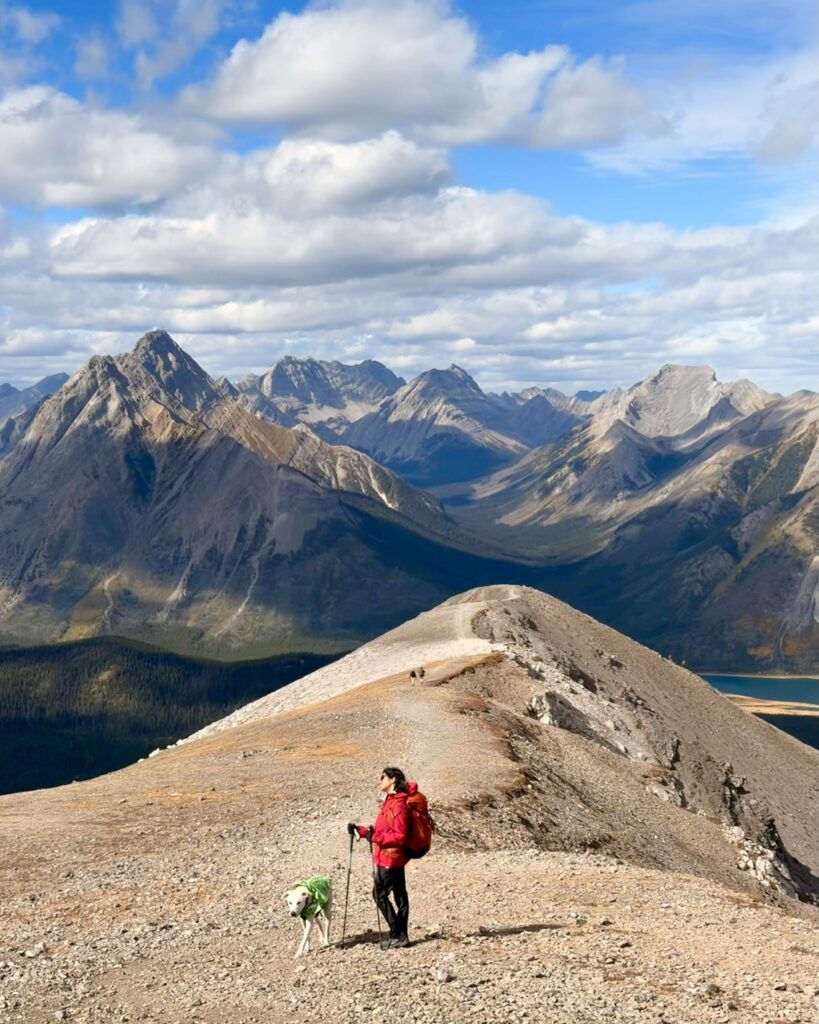
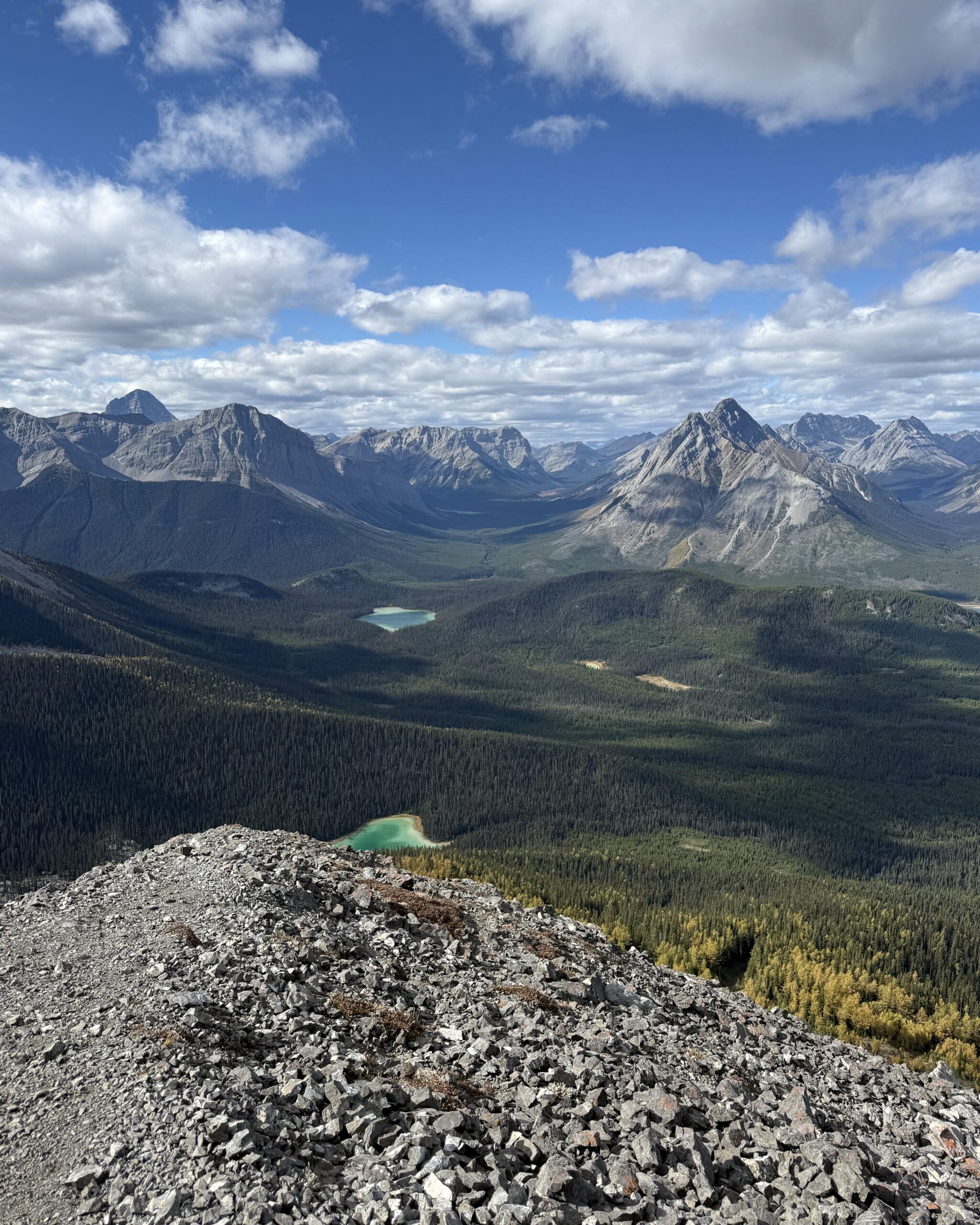
Most “great” hikes in the Rockies make you choose: you either climb hard and earn one viewpoint at the summit, or you walk a flat valley with the mountains around you. Tent Ridge gives you both. The first kilometer and a half is a steep uphill grind through trees that hides the view completely — and then suddenly you’re above the treeline and walking the edge of a horseshoe-shaped ridge with the entire Spray Valley spread out below you.
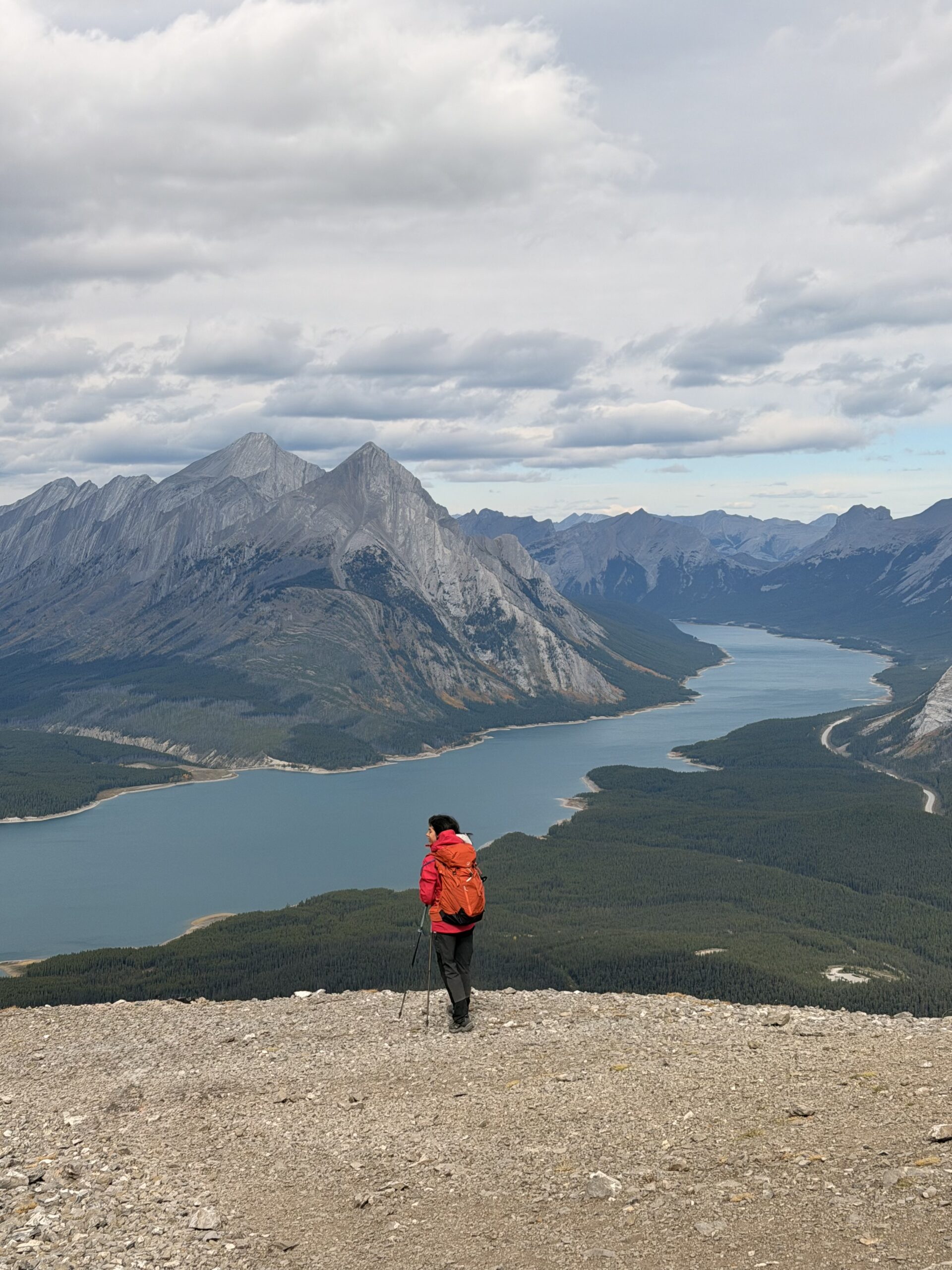
The 360° from the ridge is the best in Kananaskis, full stop. The Spray Lakes Reservoir, Mount Smuts, Mount Galatea, Mount Birdwood — they all line up from up there. On a clear day you can see straight back into the Smith-Dorrien valley, with the Spray Lakes glittering in the bottom of it.
It’s the kind of view that’s almost embarrassing to take a photo of, because no photo does it. I sat at the top high point for the better part of an hour on my last trip and didn’t say a word. My dog flopped in the sun. The wind dropped. I drank cold coffee out of a thermos and felt, for the first time that whole season, properly off the clock.
When to go (this matters)
The trail is technically there year-round, but don’t go before mid-July. The ridge holds snow late, and exposed snow on a narrow ridge with a steep drop on either side is a different hike entirely. I made the mistake of going in late June one year and turned around at the first cornice. I do not recommend this character-building exercise.
Standard sweet spot: late July through mid-September. Weekday mornings if you can swing it — by 10 a.m. on a summer Saturday the small parking lot is overflowing.
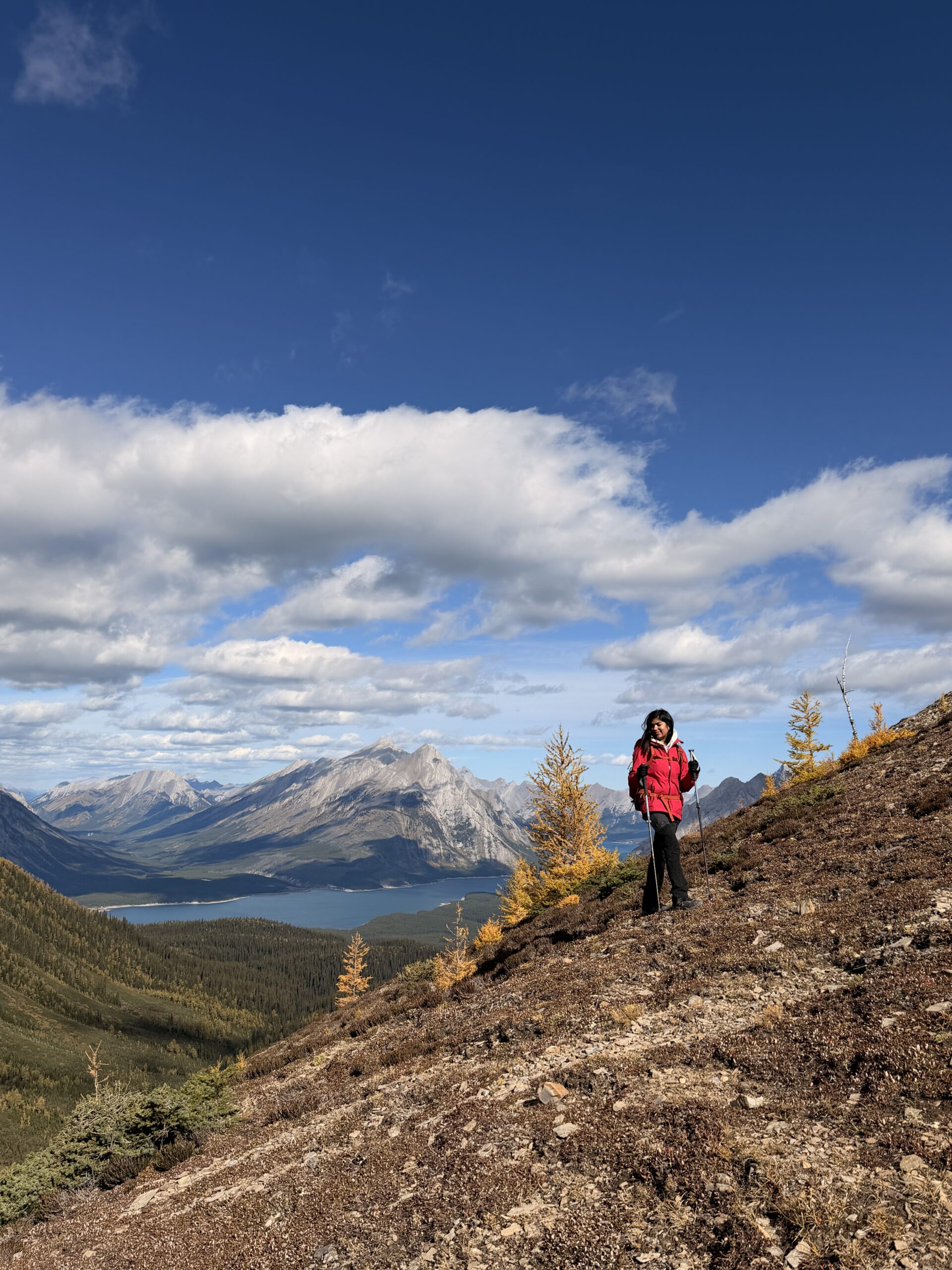
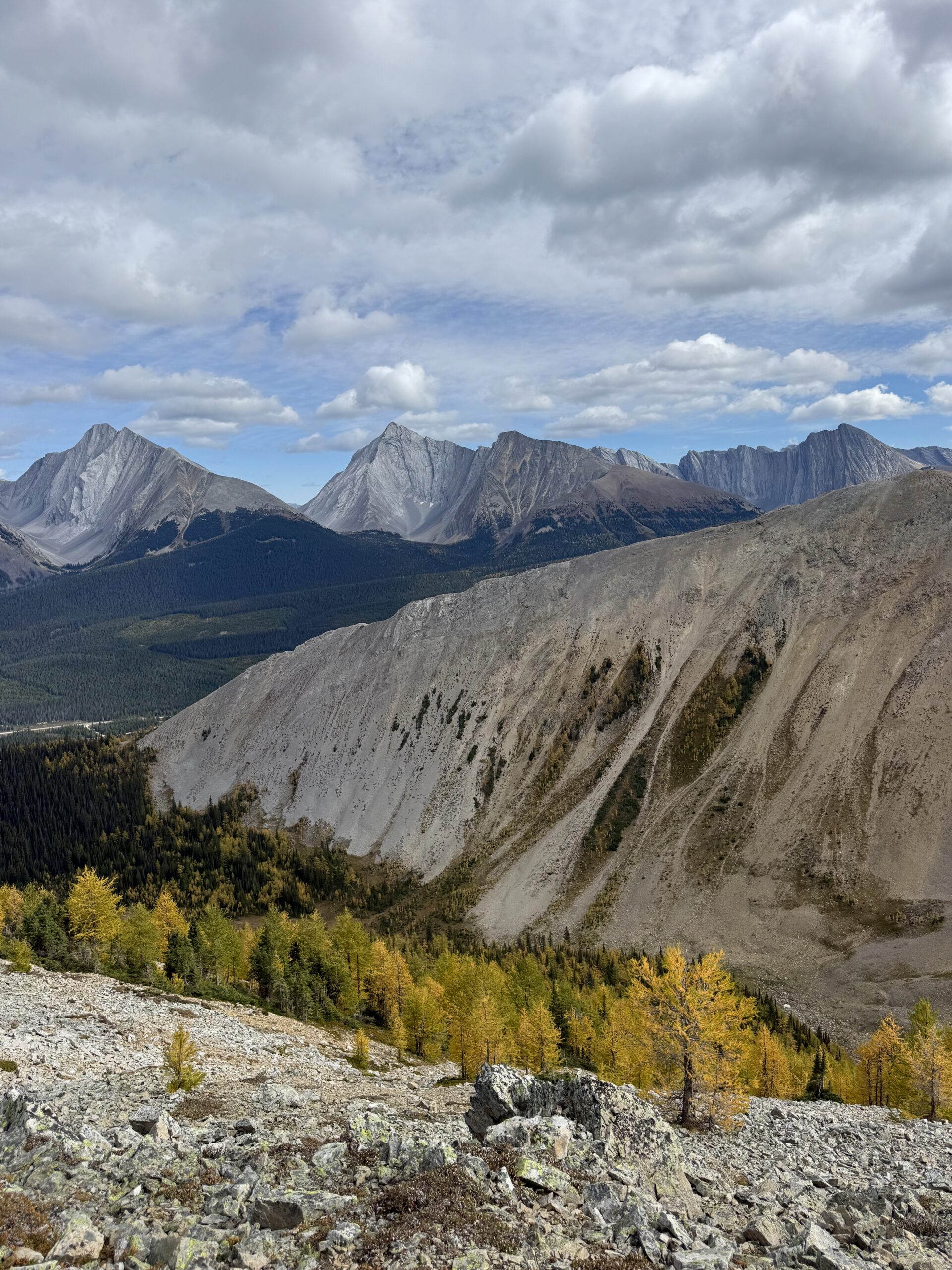
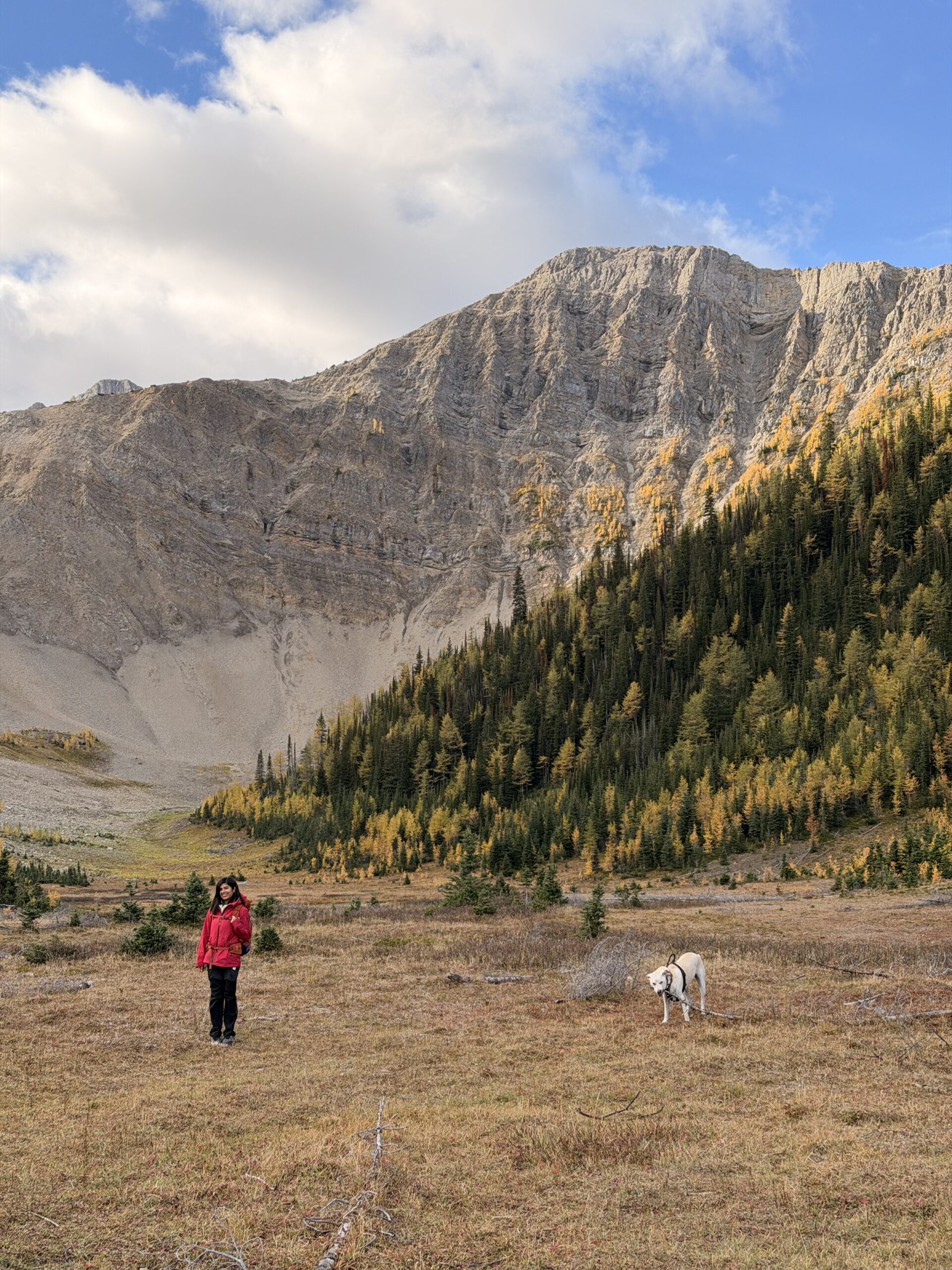
My favourite window: larches season. I went on September 26 and it was unreal. The larch trees on the ascent and descent were at peak gold, and the ridge sat in a halo of yellow. The window is narrow (roughly the last two weeks of September into the first few days of October) and the weather is fickle that time of year, but if you can catch a clear larches day on Tent Ridge it is, hand on heart, the best day-hike in Alberta. I’m not going to oversell it. It already sells itself.
A few honest notes about going in larches season: pack warmer layers than you think (the ridge is much colder by late September), start earlier (less daylight), and check the snow forecast obsessively — a fall storm can shut the ridge down for the season overnight.
Watch the weather forecast obsessively. The ridge is fully exposed for 3–4 km, and it’s properly windy. There’s no shelter and no shortcut down. If thunderstorms are in the forecast, pick a different day. I know that sounds dramatic, but every season someone gets caught up there and regrets it.
Weather and layers: the part most people underestimate
I’ll be honest: on Tent Ridge, the weather is the variable that ruins more hikes than fitness, navigation, or daylight combined. The drive from Calgary takes you from prairie weather to alpine weather, and those two systems often have completely different opinions about what kind of day it is.
A few things I’ve learned the hard way:
- The temperature on the ridge can be 15–20°C colder than the parking lot. I’ve started a hike in a t-shirt and finished it pulling on every layer in my pack while shivering. Always have a real warm layer — even in August.
- The wind on top is not the wind at the bottom. What feels like a gentle breeze in the trees turns into a steady 30–40 km/h slap on the ridge. A wind shell is non-negotiable.
- Weather can change in 30 minutes. I’ve watched a perfectly blue morning roll into a snow squall by 11 a.m. The forecast you check the night before is a guess; the one you check on the drive in is a better guess. Don’t be precious about turning around.
- In larches season, snow is a real risk. A late-September storm doesn’t just make the ridge cold — it can lock it down for the season overnight.
The layering system that works for me:
- A merino or synthetic base layer (long sleeve, even in summer).
- A light fleece or down midlayer in the pack — on your body if it’s cold.
- A wind shell or hardshell at the top of the pack — easy to grab.
- A warm hat and light gloves, even in August.
- A buff or neck gaiter (this saves your face more than you’d think on the wind-blasted ridge).
If you forget anything else, don’t forget the wind shell. The ridge will remind you why.
The hike, section by section
Trailhead to treeline (2 km, the grunt)
This is the worst part of the day. It’s steep, root-laden, and gives you no view as a reward. Just keep moving. Take a snack break in the trees about a kilometer in if you need it — the cool shade is nicer than the windier ridge for snacking.
If you’re hiking with a dog (more on that in a separate post), this is the section where they need water most. The forest is dry and the climb is relentless.
Treeline to ridge (1 km, the payoff)
The trees thin, the trail mellows, and you start to see what you’ve been climbing for. This is where I take my first proper break. Not for elevation — for the visual reset. Look back the way you came; the perspective is wild.
The ridge walk (3–4 km, the reason you came)
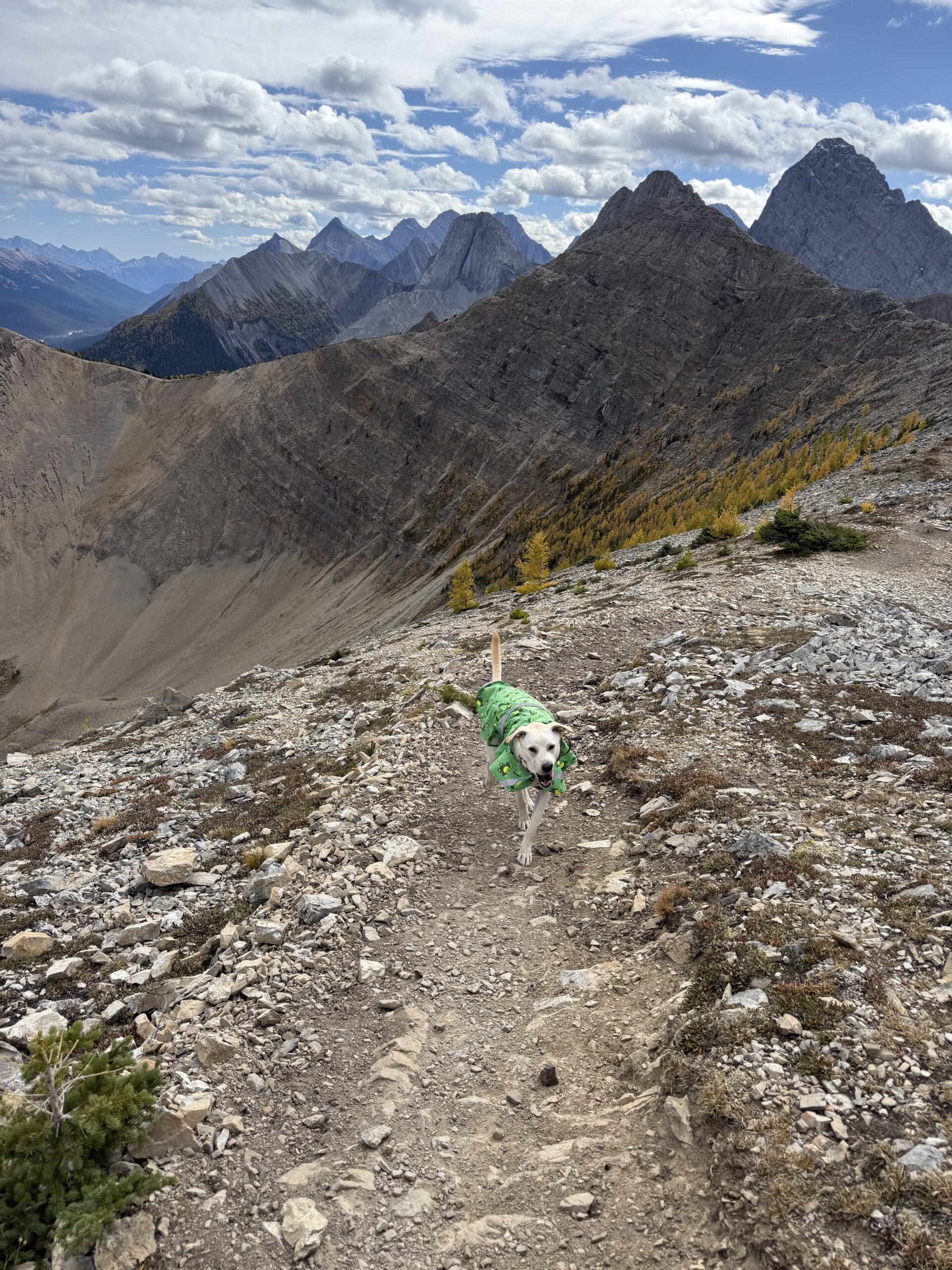
A horseshoe-shaped ridge with three high points. The trail along the top is mostly walking on broken rock, with a few short scrambling sections that involve hands and careful footing. Nothing technical — no ropes, no climbing skill required — but you will need to commit to the moves and trust your boots.
Move slowly here. The drop on either side is real and the wind will absolutely shove you. Take your photos a few feet back from the edge. I’ve watched people get cocky on the ridge and I’ve watched the ridge correct them.
The middle high point has the best 360°. I always sit there for at least 20 minutes. Bring a lunch.
Descent (3 km, the knees)
The trail comes off the back of the ridge and switchbacks down through scree and then forest. Loose rock for the first 500 m — trekking poles save your knees here. After that it’s a regular forest descent back to the parking lot.
Gear that actually mattered
I’ve over-packed and under-packed this hike both. Here’s what I now consider non-negotiable:
- A real wind layer (my hardshell) — mandatory even in August. The ridge is twenty degrees colder than the parking lot.
- Trekking poles (the ones I use) — not for going up, for coming down. Trust me.
- Hiking boots, not trail runners (my boots). The descent is loose.
- 2L water minimum (my hydration setup) — there’s no water source on the trail, and the climb is dry and dusty.
- Sunscreen and a hat — the ridge has zero shade.
- Snacks for two breaks — I always pack extra. Hangry decision-making on a ridge is bad.
Logistics
Getting there from Calgary: Roughly 1.5 hours. Take Highway 1 west, exit onto Highway 40 south, then onto Highway 742 (Smith-Dorrien Trail). The last 50 km of Smith-Dorrien is gravel, so don’t be alarmed when the pavement ends. Drive carefully — washboard sections and surprise potholes.
Parking: Small lot at the trailhead. If you arrive after 8 a.m. on a weekend, expect to park along the road. Don’t block the access.
Pass: Kananaskis Conservation Pass is mandatory. Buy online before you go ($15/day, $90/year). Rangers do check.
Service: There is none. No cell, no bathrooms, no water. Tell someone where you’re going and what time you expect to be back.
Things I’d tell first-timers
- Start early. Like, 7 a.m. early. The trail’s better in cool morning light, and it dodges weather.
- Don’t underestimate the descent. People always blow through the climb and then regret the way down. Pace yourself.
- Go counter-clockwise (anti-clockwise). Most people default to clockwise; I’d argue against it. Counter-clockwise saves the best ridge views for the second half of the day, and the descent is friendlier on the knees. This is the order I now recommend to everyone I send up there.
- If you turn around partway through the ridge for any reason — weather, energy, instinct — that is not a failed hike. The ridge will be there next weekend.
Hiking with a dog?
Yes — Tent Ridge is dog-doable, and mine has done it. A few honest notes from the trail with my 80-lb co-pilot:
- The scrambling sections need a strong dog. Mine needed motivation (and once, a gentle two-handed boost) in two specific spots — both on the way up to the high point. He looked at me like I’d betrayed him, and then he did it. If your dog is leggy, fit, and confident on uneven rock, they’ll be fine. If they hesitate on city stairs, this is not their hike.
- Leash strategically. I let mine off-leash on the wide, calm stretches where there was room to maneuver, and clipped him on for the scrambling sections, the narrow ridge spots, and the loose descent. The trail tells you when to leash — exposed drop, tight scramble, or other hikers nearby = clip on.
- Bring more water than you think. The climb is dry, and there’s no water source on the entire loop. I carry an extra litre just for the dog.
- Watch their pads on the descent. Loose scree at the top of the descent can tear soft pads. Booties aren’t a bad idea if you have them.
A confident, fit dog will love this hike. A nervous one will hate it. Be honest with yourself about which one yours is.
Final word
Tent Ridge is the kind of hike that resets something in me. After a few hours up there you remember that Calgary lives next door to one of the most absurd mountain landscapes on the continent, and that it doesn’t take a multi-day expedition to be in it. I came home from September 26 with sore knees, a tired dog asleep on the floor, and a head that finally felt quiet. Pack snacks, watch the sky, and take the time to sit at the top high point.
I’ll see you up there.
— Medha